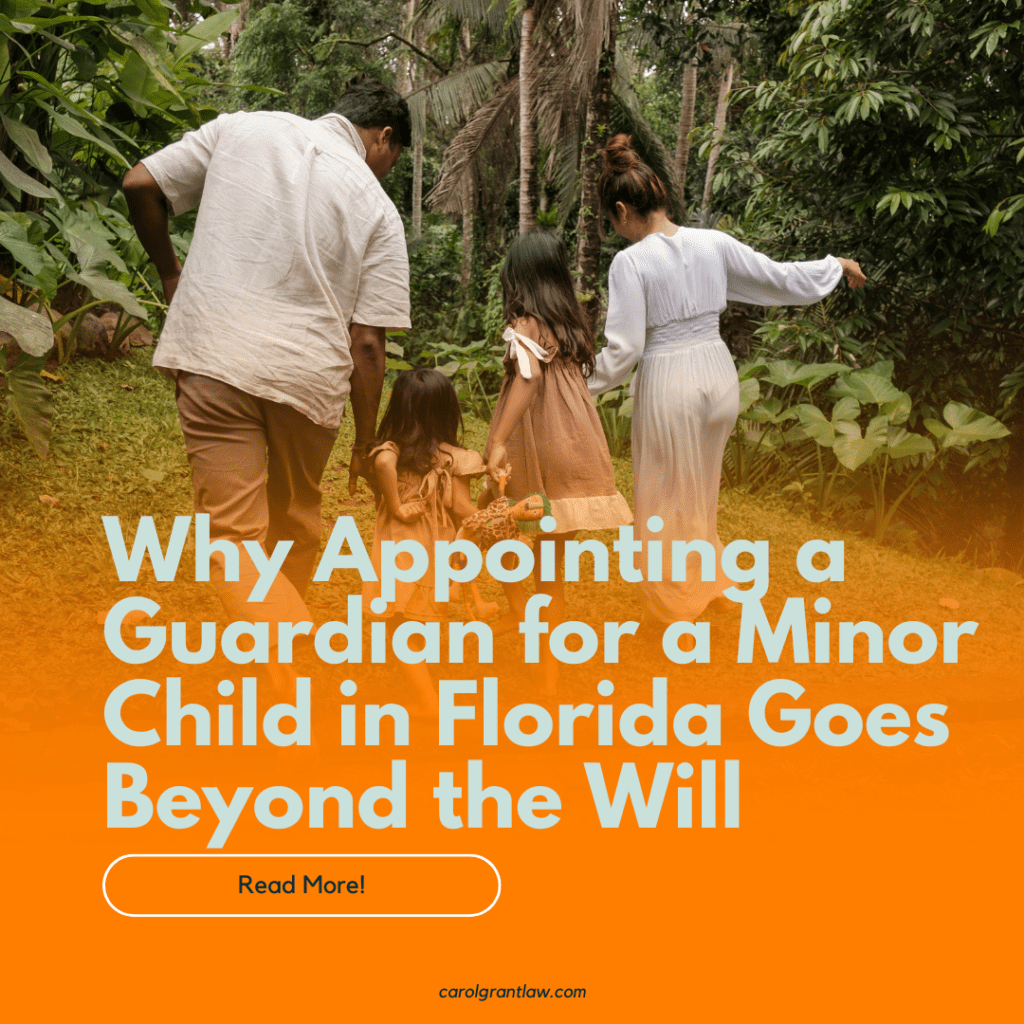

Few things matter more than making sure your minor child is cared for by someone who loves them if you pass away. If you plan to name a guardian for a minor child in Florida in your will, start by building a warm bond between your child and the chosen person.
I bring years of work with Florida families to guide you.
Who Does Your Child Call Family?
Imagine a time when your child might need to live with someone else. Would they feel safe with strangers or with someone they already know? One mother in Ohio arranged for her daughter, Kathryn, to spend time with an aunt and uncle in Colorado.
They set up several visits so Kathryn got to know them well. Over time, Kathryn began to see them as real family, not just names on paper.
What Is a Legal Guardian and How Do You Appoint One for a Minor Child?
A legal guardian acts for someone who cannot make decisions on their own, such as a minor child.
According to NerdWallet’s article, “Guardianship: What a Legal Guardian Is, How It Works”, the guardian looks after personal care, makes health decisions, and manages the child’s assets until they grow up. You name this person in your will.
This gives them the legal right to care for your children if you pass away or become unable to act before they turn 18. Forbes offers practical tips in their article, “10 Tips For Choosing A Guardian For Your Minor Child.”
Can You Change Your Mind about a Guardian?
Yes, you can. Life can take unexpected turns, and your choice may need a fresh look. You might first feel that someone is a good fit, but later, changes in family life might call for a new decision. Set aside time every few years to review your will.
Why Might Grandparents Not Be the Ideal Choice?
Many people naturally think of grandparents as the best pick. They have raised you and may seem like a safe choice. Still, consider their age and health. Sometimes, grandparents find it hard to keep up with a growing child’s needs into the teen years.
They can still play an important role, perhaps as support rather than the primary guardian.
Is Compromise Necessary?
Family decisions can stir up tension, especially when spouses prefer different candidates. It helps to reach a fair solution. One family member might care for the child day-to-day while another handles money matters. A balanced split can cut down on stress and secure the best outcome for your child.
What about Close Family Friends?
Never ignore the trusted friend who has always been there. A close family friend who shares your values and even has children about the same age might offer your child a steady routine at school and in life. If your child already sees them as part of the family, that bond is priceless.
How Do You Choose the Right Guardian?
Choosing a guardian is about more than filling in legal forms. Think about who you would call in an emergency and who knows your child’s favorite bedtime story. Watch how they interact with your child. The best choice is someone your child trusts and cares for deeply.
Financial and Property Guardianship Details
If your child comes into a sum of money or property that exceeds $15,000, the law calls for the appointment of a guardian to look after these assets. This rule makes sure that important financial matters are managed by someone trusted until your child is old enough.
The process starts when parents file a petition with the court to be named the guardian of the property. Once the child turns 18, the guardian files a final accounting with the court and the assets are then transferred directly to the young adult.
Why You Shouldn’t Leave a Guardianship Decision to the Courts
You would not want strangers making choices for your child. If you let the court decide, you lose the chance to choose by your own judgment. By naming a guardian in your will, you keep control over your child’s future. It is a simple step that shows careful planning.
Understanding Guardianship Types and Court Documentation
Florida law makes a clear difference between permanent guardianship and plenary guardianship. In cases where a child is dependent and reuniting with their parents is unlikely, permanent guardianship is set up.
The court’s written order plays an important role in guardianship decisions. It must explain why the child’s parents cannot care for them and why the court chose guardianship instead of adoption.
Should Your Child Have a Say?
If your child is mature enough, listen to them. They might point out details you never considered. Their comfort matters a great deal. Spending time together helps them feel secure about what lies ahead. Their view can serve as a helpful guide in your decision.
Guardianship Eligibility and Parental Review
The law makes sure that only those with a clean record can be guardians. An adult who has been convicted of a felony or found guilty of child abuse cannot be chosen to care for a child.
Even after a guardian is appointed, parents have the right to request a review if the situation changes or the guardian is not meeting the child’s needs. This means you can ask the court to consider a change if you suspect that your child would be better served with a different guardian.
Key Guardian Takeaways
- Foster Relationships Now: Connect your children with potential guardians.
- Consider Age and Health: Think about whether a grandparent can care for a child in the long run.
- Compromise With Family Members: Find a fair split that looks after your child’s interests.
- Look Beyond Family: Name a close family friend who shares your values and lifestyle.
- Avoid Court Decisions: Make your choice clear in your will.
- Involve Your Children: Ask an older child. Their view can help you decide on their guardian.
Many parents know that appointing a guardian for a minor child in Florida is important. Still, they sometimes skip building a true relationship between the child and the selected guardian.
Taking time now to build a strong bond means your child will be cared for by someone they really know when it counts. I have drawn on years of work with families, a careful study of Florida laws, and trusted sources like NerdWallet, Forbes, and CarolGrantLaw.
Please note that this content is for information only and does not replace advice from a licensed attorney.